Sunday, 5 May 2013

How to avoid the disaster & heartache of bad wedding photographs


If having a set of photographs to cherish from your wedding is important to you, then this could be the most important article you ever read!

With the advent of affordable, professional standard digital cameras, just about anyone can call themselves a professional photographer. It may come as a surprise to you but the law does not require a professional photographer to have any qualifications, training or experience! It is all too easy to get a website, some business cards, and an impressive looking camera and start calling yourself a wedding photographer, even if you have never been to a wedding.

Wedding photography is something that most people only ever buy once, and because of this, brides seldom know the potential pitfalls or what relevant questions to ask to sort the good from the bad. Remember, there are cowboys in every industry!

To help you choose the right wedding photographer for you and avoid the heartache of bad wedding photographs here are a few tips and questions to ask any potential wedding photographers:

Ask friends, work colleagues and family for recommendations.

If they did a good job for your workmate, chances are they’ll do a good job for you.

How many weddings has the person photographed alone?

Do you want someone who’s still learning their trade or someone who has mastered it?

How long have they been photographing weddings for payment?

A statement such as “I photographed my first wedding in 2005” can be very misleading. This could have been their best friends wedding and they only started earning money from wedding photography last month.

If they have not photographed many weddings, what training has the person received or have they worked with another photographer as an assistant or second photographer?

We all have to start somewhere and every industry needs new blood. If you are on a very tight budget and can not afford to hire a professional, make sure any newcomer you consider hiring has taken their training and education seriously.

Is the person a qualified member of a professional organisation such as the BIPP (British Institute of Professional Photography), MPA (Master Photographers Association), Guild of Photographers, SWPP (Socirty of Wedding & Portrait Photographers), NPS (National Photographic Society), RPS (Royal Photographic Society)?

Industry recognised qualifications are shown as letters after the photographers name such as LBIPP or ABIPP. Having a degree in photography does not mean the person is a fit wedding photographer, as there is much more to wedding photography than just taking pictures.

Does the person carry both Public Liability and Professional Indemnity insurances?
No one can guarantee that everything will go perfectly on your wedding day. Planning for the best is great, but a reputable business person will also prepare for the worst by having the appropriate insurance in place. Public liability protects you & your guests in the event of an accident. Professional indemnity insurance will pay out in the event of the photographer not delivering the promised results, loss of images or memory card failure etc. Because of the lack of professional indemnity insurance, many of the couples who have recently been awarded compensation by the courts, have still yet to receive any money from their photographer.

Are they familiar with the health and safety requirements of the venue(s)?
Most wedding venues have strict requirements for sub contractors using their premises. This will very often include PAT certified mains powered equipment, completing a risk assessment and having the appropriate insurance to indemnify the venue owners from the increased risk.

Do they have back up equipment?
If a photographer only has one camera, what do you think will happen if it develops a fault during your wedding?

Is their address and landline phone number on their stationary and website?
If they do not, or only offer a PO Box number or mobile phone number, ask where they live before booking? If something should go wrong, how do you contact them after the event? A non-contract mobile phone number can very often be untraceable, even by the police.

Do they have a comprehensive booking form with clear terms and conditions?
Some people can be wary of signing contracts, but a written contract is as much in your interest as the photographers. Read all the terms and conditions prior to signing and make sure everything that you have agreed on is included.

Is the person you are speaking to the person who will photograph your wedding day?
If not, ask to meet the photographer and see examples of their work before making a booking or entering into a contract. You will spend a big part of your wedding day with your photographer, its important to book someone you like.

Are the photos they show you original images created by them and of real weddings?
If you are not shown photographs of at least one complete wedding, beware!
If you are being shown sample albums with no photos in, beware!
If you are being shown album catalogues rather than actual albums, beware!

Some people will attend one of the many “portfolio builder workshops” available to novices, where for a fee a professional photographer will set up a number of shots of models in wedding attire and allow people to take the photo as if they took it at a real wedding. A tell- tale sign of this is the photos are only of the bride and groom. Some people will assist professional photographers and take photos of their weddings, or just take photos of a family wedding. A tell-tale sign of this is the subjects never looking at the camera.

Ask to see images from a whole wedding; preferably more than one wedding. Photographers will show you what they consider their best images. If they only show you a sample that contains one or two photographs from many different weddings, beware! A good photographer will have lots of images from a single wedding. Only showing a couple of images from each wedding could indicate they only took two decent pictures all day.

Some photographers will tell you that they only work by available light as flash or supplementary lighting will spoil the atmosphere of your wedding. In all probability that person has no experience of working with other light sources. So what they are really telling you is that they have limited skills and unless the natural light is perfect on your wedding day, they won’t know what to do.

Many photographers advertise themselves as photo-reportage or “fly-on-the-wall” unobtrusive photographers.
Some photographers are brilliant at this as they trained and worked as freelance photo- journalists or for newspapers, some are just naturals. Expect to pay hefty fees for a good photo-journalist as they are in great demand. Other people are merely “snappers” and shoot like this because they do not have an eye for what makes a good image, are not able to “create” a good image and/or are not comfortable dealing with groups of people. Chances are they will only give you a collection of random images, often no better quality than what your guests take.
You get what you pay for.

We all love getting a deal and saving money, but a cheap starting price nearly always means low quality. Very often it can also mean hidden charges. If you buy cheap shoes and the sole falls off the first time you wear them, you can take them back. If you buy a cheap diamond ring which turns out to be a fake, you can take it back. If you hire a cheap plumber and they flood your house, you can get the house fixed up as good as new. In all these instances, if things go wrong they can be put right
But your wedding day is a one shot deal so the photographer has one chance to get it right. If they don’t there is no coming back next week for another go, and even if you do, you will know the pictures are not of your wedding day, but of the day you staged to make up for your wedding photos being ruined by someone claiming to be a wedding photographer, who turned out to be nothing of the sort. By all means shop around for a good deal, but don’t decide based on price alone.

Trusting a family member to photograph your wedding.
In the majority of cases, if you have a friend or relative with a good camera and ask them to photograph your wedding to save money they may say yes, but you have none of the comeback when something goes wrong. The photographer needs to have professional detachment in order to get the best images. A professional wedding photographer makes it look easy because she is a professional and has a vast wealth of experience to draw upon.

Do they have a plan in place for if they can’t attend your wedding?
They can tell you they have never missed a wedding yet, but there is always the first time. Accidents happen, usually when you least expect them. Reputable photographers will usually have links with other photographers and they cover for each other should the worst happen. Can they provide a named photographer who will shoot the same style to take their place?

Do they only provide a disk of unprocessed images straight from the camera? 
If so, it is doubtful if they have any post-production or image processing skills. It could also be an indication that they have no arrangements with the suppliers used by the professionals.

Don't believe that it can be fixed in Photoshop. 
Image retouching and manipulation is a skill that has to be learnt over many years. There are no quick fixes. People new to photography do not realise this. Much of the time images need to be created with post-production or Photoshop in mind.

A Final Thought
Your photographer is charged with the task of recording your wedding day for you. They will be creating the only material thing that survives past the honeymoon. They will have to interact with the Vicar/Priest or registrar, the reception venue staff, your wedding planner (if you have one), the car drivers, the DJ/Band, the toastmaster (if you have one) and all of your guests. You will be spending a good proportion of your day with your photographer. They will have one eye on you all day, watching for the special moments that make great pictures.

This means your photographer is more than just a service supplier. To get the full return on your investment you will need to work with them before, during and after your wedding. So book someone you can get along with, someone who can work around and within your plans.

Good luck for your wedding day and for your future together.

NOTES
This article was written by Ian Pack in collaboration with Paul Spiers of the NPS. You may use article in the whole unedited form on the condition that the authors are both clearly acknowledged.

Ian Pack is an established commercial photographer and film maker with over 500 weddings to his credit. He has been featured in national photography magazines and trains emerging and experienced photographers in lighting techniques.


Paul Spiers is a wedding photographer and also trains wedding photographers. He is a regional officer for the NPS and on their panel of experts. Paul has been featured in British Journal of Photography, Photo Pro Magazine, Image Maker Magazine & Advanced Photographer Magazine.

This article has been bought up to date and republished as it has been bough to my attention that there are wedding photographers publishing this content on their websites as if it were their own and without attribution.


Lowepro Pro Roller x200 Off-Road Modification


Oversize pneumatic wheels retro fitted to a Lowepro Pro Roller x 200 camera case

Rolling camera bags in my opinion are the must have accessory for any photographer on the move. The manufacturers have done a great job with their designs so long as you work in an urban enviroment.

I am sure that I am not alone in needing a rolling camera bag with larger wheels to cope with the rougher terrain encountered in much of my work. As there does not seem to be a product suited to my needs I have modified my Lowepro Pro Roller x200, featured here in my blog during 2012.

Fortunately, the wheels on modern rolling camera cases are designed to be replaced and are removed with a standard metric allen hex tool.

The modification was quite simple as I had most of the parts laying around my studio, with the exception of left-hand thread studding and nuts, which with a quick search via Google yielded a few options. As you look at the bag from the side that opens, the right wheel bolt has a right-hand thread and the left a left-hand thread. This ensures that the axle bolts do not work loose in operation.


The wheels are from a trolley I use to move heavy equipment cases, which have a larger axle diameter than the axle bolts on the bag. To reduce the diameter I cut lengths of smaller diamter metal tube to create not only an axle but a sleeve bearing lubricated with grease, but if you don't have grease you can always use petroleum jelly aka Vaseline.

Similar wheels are also available from Ebay and are used as jockey wheels on trailers and the like.

Ground clearance has increased, just as well when you see the scuffs to the bag from uneven ground!

The original wheels where left in place to act as a spacer and also so I don't loose the things! An addition spacer is also required to prevent the bigger wheels from chaffing against the bag.


To lock the wheel to the axle I have used two nuts tightened against each other to form a lock nut. I could have used Nyloc nuts, but didn't have any laying about.


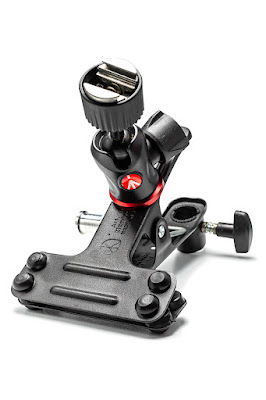
The stand is a standard Manfrotto Super Clamp with a length of 16 mm / 5/8th inch steel tube cushioned with rubber grommets. Ultimately these will be replaced with a rubber walking stick tip.

This modification can be removed in minutes returning the bag to urban configuation.

That's all folks and happy snapping;-)

Tuesday, 30 April 2013

Rosco Litepads on Location


Interest in LED lights for still and video photography is growing as is the range of lights available. I recently visited the BVE show in London to check out what the broadcast video industry are producing and there are some interesting developments which will soon be viable supplements, but not replacements for flash in stills photography.

My lighting tool box contains a variety of lights including incandescent hot lights and now LEDs in the form of Rosco Litepads. I first used the Litepad range in 2010 and was impressed from the start; native soft light that mimics a flash soft box, 8 mm deep, daylight colour temperature, battery or mains powered, compact, light in weight and consequently portable. And most important, a continuous always on light source which may be dimmed from 0 - 100%.

The image above was created on location after sunset with 50 mm f/1.4 glass on my beloved Canon 50D, images were recorded RAW (with JPEG just in case), daylight white balance, 400 ISO, 1/30th second f/2.8.


This is good light powered from 8 x AA batteries in the provided battery pack, which delivers about 2A current - the 24 inch Litepad needs 4A to be fully effective so the image you see was effectively created with the light at half power! Now in the same situation I take along a 12Vdc car auxiliary power supply which delivers sufficient power for a multiple Litepad setup.


The photographer I mentored on this shoot now works for Urban Outfitters in the UK. The 24" x 24" Litepad is a beast and was supported on a painters extension pole fitted with a Gel Clip Extension Spigot allowing standard industry lighting grip gear to attach to the Litepad frame. At a guess, I'd say the that a Rosco Litepad emits light 2x the physical size of the unit.

Litepads will not overpower sun light but are great where ambient light levels are low. Rolando Gomez and Rick Friedman both use Rosco Litepads as part of their extensive lighting repertoire.

If you get the opportunity, give Rosco Litepads a try, I think you will be impressed.


Thursday, 4 April 2013

Still Life with Available Light

I have always considered myself an available light photographer, any light that's available, literally. What follows is a quick still life I shot this morning using a combination of diffuse window light and tungsten light provided by the modelling lamp from a Elnchrom BX 500 Ri flash.

Times are hard and clients are finding innovative ways to compensate photographers;
some clients have fallen on such hard times that the peanuts paid are no longer roasted or shelled!

The image above is essentially as it came out of my camera with a few minor tweeks in Photoshop.


First shot, no modification. Available light from a 6' x 4' window with close net white drape/curtain softening the already soft cloudy sky. OK, not great, but useable. Area of bag closest to camera filled by a light in the studio I omitted to switch off.


I wanted the bag of peanuts to stand out more from the background so needed to make it darker. This was achieved by flagging the light from the window with a combination of Rosco textile Black Moulton on a custom made scrim frame - this textile is opaque so totally blocks light. The net drape was lifted in the centre to remove diffusion and increase intensity by a stop or so, whilst to camera right I used a piece of Rosco #3809 Roscscrim, a black/silver perforated material which holds back 2 stops of light. It was placed with the black side to the peanuts to reduce unwanted reflection.


As you can see from the above snap, the setup is simple, but effective. With a little modification the image works with and without the addition of the Elinchrom BX500Ri with Mini Spot Lite attachment. The gobo used was Rosco 77955 break up effect


As I was shooting a predominantly daylight source (the sky) my basic white balance was daylight, around the 5200K mark. The modelling light was much warmer at 3200K giving a localised warmth and mood.

Rosco and Elinchrom products are available in UK from The Flash Centre - contact Simon Burfoot for more information.

Monday, 25 March 2013

It's All In The Eyes

It has been said the eyes are the gateway to the soul, yet so many portrait photographs exhibit lifeless eyes. This can be the effect of inattention by the photographer when positioning lights, posing or directing the model. In many cases working in a studio where the ambient light levels are low because the flash modelling lights are switched off or the studio house lights are low or off altogether!

Image straight out of camera with usual processing, not much else!
Nice bright eyes showing off the iris colour. I tend not to work with the flash modelling lights on and rely on one of the studio house lights behind me and in front of the model. I use a shutter speed where the ambient light has no influence on the flash exposure.

I personally prefer to see eyes exhibiting the colour of the iris, rather than a dark wide pupil.

There are a number of ways which can correct this - a low power light on the camera/lens axis to fill the shadows created by lights above eye-level will also close the pupils giving more iris colour.

Photographer Rolando Gomez demonstrates this over on his Lens Diaries blog - A Perfect Solution for Shooting Beauty like many photographers Rolando is now exploring the possibilities of using continuous LED lights in his work, especially Rosco's Litepad range and the Litepad Loop.

Here in the UK, photographer Rob Rook has created his own fluorescent ring light with components from a local DIY store.

© Copyright Rob Rook 2013 reproduced with permission

As you can see in the image above, an on-axis light creates wonderful light in the eyes, contracts the pupil giving greater colour (OK it's a monochrome image, but you know what I mean) and clarity to the eyes. The ring light catch light may also be shaped with black tape or foil to create different shaped catchlights, very much like the masks supplied with Rosco's Litepad Loop.

Rob has been kind enough to share his ring light design on his Facebook page here and here

Rob's ring light design is great for studio use, but a little limiting on location as it's mains powered. Fluorescent tubes also exhibit weird and sometimes inconsistent colour temperature which could throw your white balance when working in colour, especially with mixed light sources. This is why LED lights which are more energy efficient and a consistent colour temperature are a necessity for consistent results.

To really see the importance of the eyes in beauty and portrait images, US photographer Joe Edelman has produced a short 4 minute video on eye placement and facial expression - for anyone photographing beauty or portraits, this is must watch and learn video!


That's it for now, TTFN!


Saturday, 16 March 2013

Green Screen & Chroma Key


Green screen technique can be tricky for still or video photographers to master especially if you use DIY or inferior gear. Over the last few years I have read a number of blogs etc about photographers, experience with varying degrees of experience with green or blue screen, lumakey or chromakey techniques.

http://www.rosco.com/spectrum/index.php/2013/03/going-green-screen/

There are issues which need addressing at the shooting stage of production which will make post-production a less stressful process. The first is the quality of the background, whether you choose to use a painted cyc or cove, or some kind of textile. The colour of the background is critical; what looks green or blue and even to you and the camera in fact may not. This is due to the pigments or dyes used to create the colour. If you go to the local DIY or hardware store and get paint specifically mixed, a number of pigments will be used, not a chromatically specific pigment. The same applies to textiles; what looks green or blue may actually contain contaminates invisible to the mark human eye and video camera. Also, with textiles they must be stretched smooth as any creases create shadows. It's only when you get into post do any deficiencies show.

The other element is good lighting. Remember to ensure that the foreground lighting doesn't contaminate the background. Control it carefully with flags, scrims, barn doors or whatever. Turn of the background lights and check on screen for any spill contamination on the background. Lighting the background is just as important. Make sure illumination is flat and even across the cyc, cove or textile. Make sure you either a native diffuse light source, or hard lights which are diffused in order that any overlap between lights blends evenly and doesn't create hot spots.

My friends at Rosco have created an excellent blog showing green screen best practice, to coincide with St Patrick's Day on 17th March. The blog shows how to shoot the background plate, tips for matching the location lighting in the studio and post-production, including comparing DIY paint issues and the effect of single pigment specific green screen paint.

http://www.rosco.com/spectrum/index.php/2013/03/going-green-screen/

If you can't read this now, bookmark and read when you get time or refer back when necessary, you will not be disappointed!

Wednesday, 6 March 2013

Soft Boxes and Shadows

The collapsible soft box, especially those manufactured by Lastolite and numerous look-a-likes have grown in popularity with photographers, especially those working on location and fans of Strobist-style lighting and off-cameras flash.

The aim of this blog is provide a reference showing the effect of the light source and diffusion on your model, in this case the long suffering Fred who never protests or demands exorbitant fees when I overrun!

Click on images to view larger

For the purpose of this exercise I set the zoom on my flash to 50 mm. What one must bear in mind when using a Speedlite based soft box, the light emitted from the Speedlite projects forward with little beam spread to bounce off the reflective interior of the soft box, the majority of internal reflection is created by light bounced from the front diffusion panel.

In the frame above what you see is effectively an undiffused direct Speedlite creating a hard edge, dense shadow, with little or no influence from the soft box. The background is white plastic which has created a fill to the shadow under Fred's chin.


With the addition a white translucent Sto-Fen Omni-Bounce style diffuser the edge of the shadow benefits from the light spread created by the diffuser bouncing off the soft box interior.


With the Omni-Bounce removed and the soft box front white diffuser panel in place the light spreads making a broader softer edge shadow. As the flash is not diffused any internal reflection will be from light reflected back from the front diffuser.


Putting the Omni-Bounce back in place with the front diffuser creates double diffusion where the light emitted from the flash is no longer a beam and spread to create internal reflection.

Do remember that anything you place in front of any light source, flash or continuous, unless it is totally clear and without colour will reduce the light output; here I had to adjust the flash power incrementally to over two stops from the initial exposure to maintain a constant aperture. I was using the Manual setting on my flash for this exercise, but if you're working TTL the camera and flash will look after the exposure for you.


With a few exceptions, the interior of soft boxes is a bright specular neutral silver as this is the most efficient reflector. If you line a soft box with a less reflective white neutral material such as Rosco﹟3830 Spun Silver (which incidentally is double sided benefiting from textured silver and textured white sides) this has the effect of diffusing the internally reflected light creating an even softer light with shadows exhibiting broad edge gradation and less density.


If you are lucky enough to own or have access to portable battery flash such as Elinchrom Ranger Quadras the light quality will differ as the flash tube is not enclosed as with a Speedlite, but totally open  emitting light in all planes.


If you add a deflector inside the soft box you have a very usable beauty dish giving an edgy diffused light which is very much in fashion at present. Adjusting the position of the deflector will create different shadow effects - remember that light illuminates and shadows define.


Broad soft light created with a combination of internal Rosco﹟3830 Spun Silver (white side), a silver deflector and white front diffuser. Elinchrom produce a set of deflectors which include a gold, white and translucent offering differing looks. Even the textile on the front of the soft box will alter the look of the image. 


If you are able, it's sometimes best to get a feel for lighting in controlled and constant environment away from models, this will then give you greater confidence in the studio with models. Fred has numerous relations all who are available for reasonable prices from shop fitting suppliers on and off line.

In his basic form Fred is unpainted white polystyrene which I painted with water-based emulsion testers from the local hardware/DIY store.


Wednesday, 27 February 2013

LED Lights for Stills Photography


I spent the day at the Broadcast Video Expo in London yesterday looking at continuous lighting which may be of use to stills photographers. There are more and more LED units appearing on the market for a broad range of applications and prices. Soft lights, there are few, but hard direct LEDs seem to dominate (motion picture DPs and gaffers work differently to stills photographers). By their nature, direct LEDs give a very hard light, which when shone directly into the talent's face will give an effect similar arc eye or rentina burn.

Many of the new LED lights on the market are going to open up many opportunities for stills photographers, but some will need to rethink their lighting and fear of high ISO, which on newer full frame DSLR cameras will not be a problem. Use of diffusion media with hard direct lights is an essential skill, soft boxes and brollies are not designed with these lights in mind, so a stock of diffusion sheets, which incidentally are not expensive and cheaper than many special light modifiers will be needed.

You can see how a small selection of Rosco's diffusion sheets work here: http://ianpack.blogspot.co.uk/2011/09/diffusing-flash-and-speedlites.html

Sunday, 17 February 2013

Lighting Alicia

This test image of Alicia Sandeman, a brilliant makeup artist was posted to Facebook a few days ago.


Alicia will provide makeup and hair for a forthcoming project, as she has never been photographed professionally, decided to take the plunge, a) to get some images for her portfolio and website etc, b) to experience what others experience in front of the camera when I'm in control, so I had to be a good lad!

A lot of people have commented on the lighting so I thought I'd share more about the image.


Before the shoot I had not met Alicia, only spoken to her on the phone so had no idea what to expect. So on arrival at the studio I hadn't made decisions about the background or lighting, other than having a couple of Elinchrom soft boxes set up from previous work.

As Alicia wore a black dress I opted for the black background paper so she would stand out from the background. To prevent light polluting the background I kept my key light close to Alicia just out of frame and the accent light was feathered to prevent spill.

Key to Lighting Design
1. Elinchrom BRXi 250 with Portalite 66 cm square soft box, about 1' above head height to add depth and shimmer to the hair. Softer and more subtle than a undiffused grid spot.
2. Elinchrom BRXi 500 with Rotalux 100 cm square soft box, about 1'6" above head height and angled at about 30 degrees down.
3. California Sunbounce Mini Micro reflector with gold/silver zebra, positioned below light rather than in front of Alicia to maintain a degree of modelling/soft shadow.
4. The star of the show:-)

Both lights were set to minimum power giving a quick and responsive recycle between shots.

Camera, Canon 50D, 50 mm f/1.4, Elinchrom Skyport. ISO 160, 1/125th second, f/9. Exposure was established using a Sekonic L408, none of this wind the power on the flash down until it looks right. Using the exposure meter looks professional and saves precious time.

This simple set up works with a variety of backgrounds and allows the model room to move. The crop here was in camera, not added in post, allowing either a landscape or portrait crop from the one shot.

A monochrome treatment using Snapseed on an iPad.

Elinchrom lights in the UK are available from The Flash Centre. Contact Simon Burfoot and mention this blog.


Friday, 15 February 2013

Rosco Lighting Gels in the Studio

Colour correction and colour effect (FX) gels have to one of the most underused tools in the photographers tool box, whether working in the studio or on location.

In the studio most photographers use coloured gels to light backgrounds, but what about the subject? Many proponents of off camera flash and Strobist style lighting seem to use the paler cuts of CTO (Colour Temperature Orange) gels such as Rosco Cinegel #3408 1/2 CTO, #3409 1/4 CTO and #3410 1/8 CTO. All of these for my taste are too red, so I either use CTS (Colour Temperature Straw) #3441 for daylight to tungsten/incandescent correction. For warming northern hemisphere pale flesh tones  Rosco Cinelux #02 Bastard Amber or the more subtle #302 Pale Bastard Amber.

Rosco Cinelux swatch showing
#302 Pale Bastard Amber and #02 Bastard Amber

Click on image to view larger

As you can see in the above dyptic on the left, Jamie's skin tone isn't his normal summer tan. But then with the summer we've just experienced in the UK I'm not surprised! On the right you can see the effect of adding a Rosco #02 Bastard Amber warming gel in front of the flash tube.

The background for the above images was white cyc paper lit only by the light spill from the key light, a large silver PLM brolly with a Canon 550 EX Speedlite set to 24mm to camera right, feathered so only the edge lit Jamie. 

When working with coloured gels, I try and shoot a control image without the gel, either for the just in case scenario where you need an alternative, or as a reference comparison as above.

You can also introduce gels to change the mood and atmosphere of an image. Most will go straight to a coloured primary or secondary colour for the background, but few will think about using a cinematographers lighting FX gel such as Rosco Cinelux #3152 Urban Vapor. This gel is designed to simulate the colour of sodium vapour street lights without the horrid green content to the light.

Rosco Cinelux #3152 Urban Vapor gel


Creativity with 3 small flash units in the studio.

Here I've used Rosco Cinelux #02 bastard Amber on the key light, which incidentally was a DIY homemade beauty dish. The accent back 3/4 light was a strip light made from a 3" diameter card postal tube lined with Rosco Cinegel reflection material #3830 Spun Silver (bright side) and diffused with #3030 full Grid Cloth, a diffusion material not dissimilar to that used to diffuse soft boxes.

The background was lit with a single Speedlite zoomed to 105 mm, single cut of Rosco #3152 Urban Vapor held in place with a Gel Clip and snooted with Rosco Photo Foil (aka black wrap) to give the shape and effect of a street light. Do remember with gels that the more light you push through them, the paler they'll appear. Here the light was close to the white background paper as I wanted a hotspot that faded off. I was able to achieve this as Rosco's Photo Foil can be moulded to shape, and in this case an opening left to spill light onto the background giving the hot spot.

You don't need complicated gear to get some great effects in camera - just previsualisation, planning and some relatively inexpensive kit. In my experience, the cost of a camera and lens can far outweigh the cost of lighting kit. All it takes is practice and imagination to create some great images.

You can learn more about Rosco's vapor gels in use here with Joel Svendsen.


Wednesday, 23 January 2013

New Gel Clip Supplier

I'm pleased to announce that Crazy Daisy Shop are now an Official Gel Clip Reseller. Welcome:-)

http://www.crazydaisyshop.com/products/74-gel-clip-original-gel-holder-for-all-flashguns.html

Crazy Daisy Shop also sell a range of quality photography accessories for professional and enthusiast photographers.

Monday, 10 December 2012

Elinchrom 44cm Reflector Light Shaper

Retro Reflector on Modern Flash Head

Elinchrom have published their 2013 catalogue which includes one of my favourite light modifiers ever made, the Light Shaper or now the 44cm Reflector with Grid.

I have a (approximately) 30 year old Light Shaper - built to last from pressed aluminium with a metal 6mm honeycomb grid with in-built steel gel/diffuser frame.

This is why I love Elinchrom flash gear - a vintage reflector on a new BX250Ri monobloc flash head

This reflector/modifier can be used as a broad, soft light for small groups and portraits; products and pack shots; for more directional effects with the grid in place or as a softer directional light with a frost, spun or grid cloth diffuser under the honeycomb grid.

Here are a few images of my buddy Rob, an aspiring Rat Pack member!


On its' own the Light Shaper gives a good spread of light and controlled shadows with distinct feathering.


Add the 6mm honeycomb grid for more direction and controlled spill. Positioning of both model and light are critical when using the honeycomb.


 Add Rosco 3032 Light Grid Cloth for a softer controlled beam, reminiscent of Holly style lighting. In the image the key light was the Light Shaper, accent/separation back light provided by a 66 cm Portalite soft box, and background light from a Elinchrom Mini Spot Lite with Rosco 77138 Cats Window D Series gobo.


And finally, the bare white reflector with a silver deflector, so no direct light from the flash tube, which is reflected back from the silvered deflector onto the white surface giving lovely soft shadows with gentle gradation. Image processed with Nik Software Snapseed for Mac Desktop.

Elinchrom flash is available direct from the UK importer The Flash Centre. Contact Simon Burfoot and don't forget to mention this blog - simon@theflashcentre.co.uk


Tuesday, 4 December 2012

Gel Clip Extension Spigot


As many of you will know when shooting off-camera flash on location, conventional tripod lighting stands can be a real pain to position on uneven ground or place close enough to the subject without intruding into your frame. The solution is a lighting accessory boom which can be expensive, so here at Gel Clip we have developed a simple solution for off-camera flash and fans of Strobist lighting techniques - the Gel Clip Extension Spigot.

The Gel Clip extension Spigot has been designed to transform a relatively inexpensive paint roller extension pole into a photography lighting boom with an industry standard 16mm or 5/8th inch spigot which will accept the majority of off-camera flash, hot shoe flash and Strobist accessories with the compatible 16mm or 5/8th inch fitting.


The Gel Clip Extension Spigot is machined from a solid bar of aluminum.

It mounts either in line . . .

. . . or at 90 degrees and secured with a thumb knob to prevent twisting or movement.

Gel Clip Extension Spigot with Manfrotto 026 Lite Tite Swivel Umbrella Adapter
and Enlight Photo Frio cold shoe adaptor.

Also fits portable battery flash such as Elinchrom Ranger Quadra!

Ben and I have been using a prototype of the Extension Spigot for over year so we know it works. I opted for the Harris painters extension pole as it has locking grips which are easy to use with gloved hands - you have to think about your assistant, partner, VAL (Voice-Activated Light stand) when it's cold;-)

The Gel Clip Extension Spigot is only available from selected independent photography accessory resellers:


Painters extension poles are available from any number of outlets, both on the ground and online:


I strongly recommend that you ONLY buy a pole with a metal thread, the less expensive plastic variety will break under load.


As well as fitting standard painters extension poles, the Gel Clip Extension Spigot will also fit 19 mm tubing, including the kind you buy in DIY stores for making clothing rails.

Applications for the Gel Clip Extension Spigot are endless - use 2 or more on a 19mm rod to create a powerful TTL off camera flash; use a 19 mm rail as a background support rail and attach a Gel Clip Extension Spigot at each end of the rail to attach back lights or other accessories; attach multiple Gel Clip Extension Spigots with Speedlites or other flash units to a single rail to create a broad and soft diffused light bank; attach to a lighting stand using a couple of Manfrotto Super Clamps to take the load from your VAL - just remember that someone will need to balance the end away from the gear so the whole shebang doesn't tip over!

Happy snapping and let's see what images you can create with the help of the Gel Clip Extension Spigot.

TTFN


Monday, 12 November 2012

Rogue Flash Bender Softbox with Rosco White Grid Cloth


Speedlites or hot shoe flash are an excellent portable lighting solution which to be usable almost always need modification in some way. The Rogue Flash Bender is an excellent modifier for off-camera hot shoe flash lighting as it gives you a broader soft light from an inherently hard point light source.

 My long-suffering model and daughter Abi
- flattering light courtesy of large Rogue Flash Bender and Rosco 3030 white Grid Cloth

I've been using one for a couple of years now as my standard softener for my Canon Speedlites. There are times when more softening is desirable, especially when creating portraits, and the solution is Rosco’s inexpensive and convenient Grid Cloth.  Rosco’s range of Grid Cloth diffusers come in a variety of different densities as well as the combination Dyed Grids that offer CTB (tungsten to daylight correction) and CTS (daylight to tungsten correction) options.

The following images illustrate the effect of flash on my long suffering model, my eldest daughter Abi, who still manages to smile despite the pain inflicted by her photographer father!


1. Ambient or existing daylight only in my back yard. Notice the yellow tone to the right of Abi's face, this the reflection of a yellow/orange wall about 4 feet away.


2. Direct flash zoomed to 50mm (see kit list below) with Gel Clip holding Rosco 302 Pale Bastard Amber Cinegel to add slight warmth Abi's skin tones. Warm (red/yellow) skin tones always look better than cool (blue/green)!


3. Flash modified with large Rogue Flash Bender, Gel Clip holding Rosco 302 Pale Bastard Amber Cinegel.


4. Flash modified with large Rogue Flash Bender, Gel Clip holding Rosco 302 Pale Bastard Amber Cinegel removed to show effect of warming filter.


5. Flash modified with large Rogue Flash Bender, Gel Clip holding Rosco 302 Pale Bastard Amber Cinegel and Rosco 3030 white Grid Cloth clipped to front of Rogue Flash Bender giving softer shadow edge gradation, not dissimilar to a soft box.


6. As 5 above but distance to Abi doubled. As with a studio softbox, the greater the distance the harder the light becomes. Here the light was held at arms length above and close to frame centre.

For frames 2 to 5 the flash was hand held high and to camera left, at a distance of about 2ft 6in.

I prefer Rosco 02 Bastard Amber and 302 Pale Bastard Amber as a warming gel as it's less red/yellow than the CTO correction gel used by many photographers to warm skin tones. For me CTO, is a daylight to tungsten correction gel, not a skin tone warmer.

Rosco 3030 White Grid Cloth is a material very similar to that used to make the diffusers in the majority of commercially available studio or portable soft boxes. It is used in TV, motion picture and theatre to diffuse light over large areas. Rosco 3030 White Grid Cloth is available as part of the 10" x 12" Diffusion kit, retailing for about £19.99 or as single 20" x 24" sheets for less than £5.00. Cinegel Pale Bastard Amber is available as 20" x 24" sheets.

Rogue Flash Benders are available from many photographic retailers, click here to find a dealer near you.

Rosco lighting gels and diffusers are available in the UK from The Flash Centre or www.flashgels.co.uk


The Original Gel Clip has been designed to fit the majority of hotshot flash units available. It sits in front of the flash tube giving an air gap so the heat energy emitted when the flash fires disapates. Gels are held in place inside the Gel Clip which if fixed in place with a hook and loop strap.

Gel Clip is available from selected UK resellers:
www.flashgels.co.uk
www.sharifphotographic.co.uk
www.crookedimaging.co.uk
www.jackthehat.co.uk

Camera Settings
Manual exposure; Daylight white balance approx. 5100K; Aperture f/4; Shutter 1/50 sec; ISO 320; Metering Evaluative; Focus centre spot AF.

Kit List
Canon EOS 50D
Canon EF 50mm f/1.4 prime - just like a 80mm of full frame, but lighter and less expensive!
Canon 580 EXII Speedlite set to eTTL
Large Rogue Flash Bender reflector
Rosco 3030 white Grid Cloth
Fold back clips to attach Grid Cloth to Flash Bender
Handheld, no tripod.

Well that's it, a simple low cost and portable soft box solution for hot shoe flash.